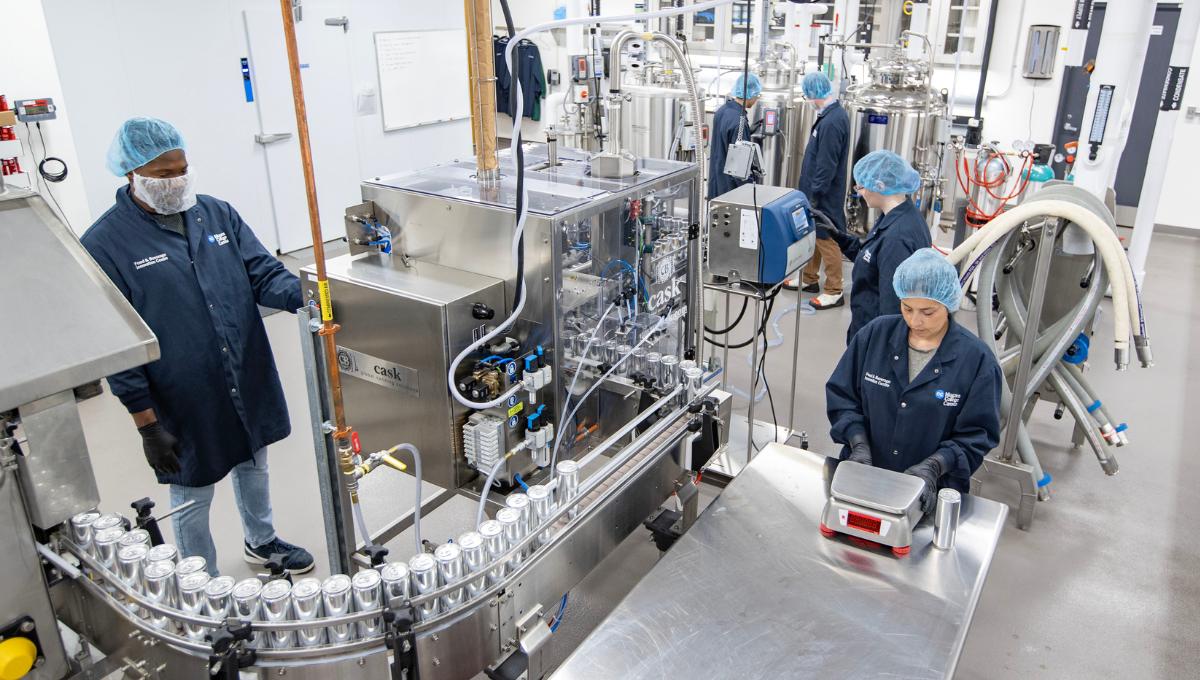
Anthony’s path from student to staff began simply, with an announcement in class.
An NC representative visited to share that FBIC’s research division was hiring and encouraged students to watch for the posting. Anthony applied immediately.
“I eagerly waited for the post to come up,” he said. “The moment it came up, I applied.”
Hired as a Research Assistant, he describes the transition as both “interesting” and “vertical,” giving him direction within a structured, technically rigorous environment where his industry experience translated immediately.
“I found the environment very welcoming,” he said. “And it was much easier for me to blend in. I’ve been in the industry, I’ve seen a bunch of equipment.”
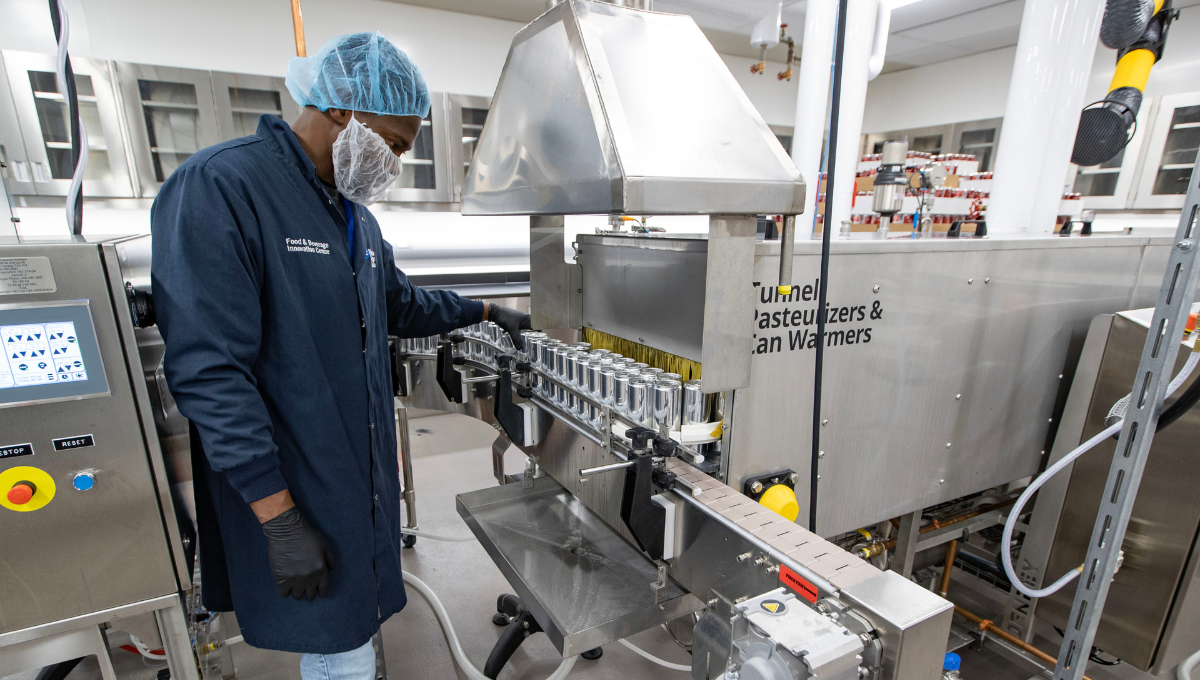
As FBIC has expanded, so have his responsibilities, from Research Assistant (student) to Research Associate (graduate), and ultimately into his current role as Beverage Production Technologist, overseeing equipment, maintaining regulatory standards, and supporting increasingly complex client projects.
He originally expected he would eventually return to industry, searching for the right production facility. Instead, he found that the environment at NC combines the structure of industry with the innovation of applied research and the opportunity to guide the next generation entering the field.
Since joining FBIC, what has stood out to him most in his roles has been the workplace’s diversity. At NC, colleagues and students from around the world work side by side. Moving from Nigeria to Canada required adjustment not just to the climate (his first time seeing snow) but also to new communication styles and cultural rhythms.
“You open yourself up and accept differences,” he said. “It gives you the opportunity to experience different cultures.”
He remembers needing time to adjust to the pace of spoken English in his early weeks as a student, understanding the language, but recalibrating to its speed. That experience now shapes how he mentors students in the pilot plant.
Today, he approaches mentorship with patience, understanding that “hearing” is not always the same as “understanding.” Mistakes, he believes, are part of the learning process. He approaches mentorship with patience, understanding that learning rarely happens in a straight line.
“There is no number of times you can correct and say it’s enough,” he said.
He hopes former students will say his guidance helped shape their path, noting, “I would be happy to have people out there that said, ‘Yes, it was him who mentored me.’ ”
“You keep correcting… until people can handle tasks independently.”