
Skip to Main Content
All News

From Cottage Idea to Canned Celebration:

Date

Jun 24, 2026

Type

E-Newsletter

Project Successes

Sector

Food and Beverage

Date

Jun 24, 2026

Type

E-Newsletter

Project Successes

Sector

Food and Beverage

Do you have an innovation in mind? A project to discuss?

To learn more about our services, contact:

David DiPietro
Business Development Manager
[email protected]

Visit our website to learn more!

How Niagara College Helped Darling Bring Everyday Celebration to Life

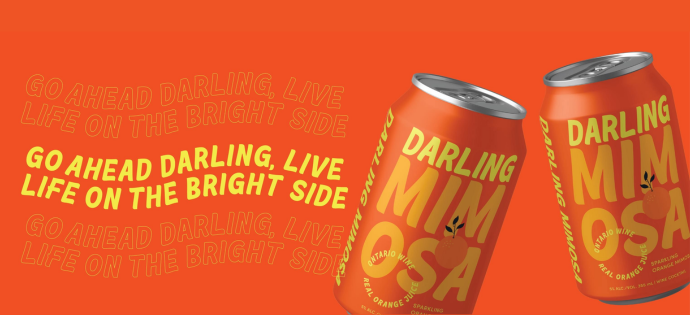
For co-founder Kim Tarlo, the idea for the Darling Beverages started with a mimosa at a cottage during the depths of COVID.

At the time, Tarlo was living outside the city, navigating lockdowns and social bubbles like everyone else. During one weekend gathering, co-founder Mitchell Stern was visiting and found himself trying to make mimosas in the kitchen for the group when a simple question changed everything.

“Mitch has always had an eye for consumer-packaged goods and beverage innovation,” Tarlo said. “He just simply asked, ‘Why isn’t this in a can?’”

What began as a casual observation quickly turned into research, and then into a business opportunity.

After discovering there were few ready-to-drink mimosas available in Canada, and none at the LCBO, the founders decided to move quickly. Tarlo brought experience in agency, communications, packaging and marketing, while Stern brought a strong interest in consumer-packaged goods, beverages, and manufacturing. The team later added partner Cait Patrick, whose operations and finance experience helped support the business as it moved from concept to commercialization.

“We decided to formulate and assemble a pitch deck of the opportunity to give to the LCBO, then agreed if they bought it, we would launch the business,” Tarlo said.

The LCBO accepted the pitch.

“We were shocked and ecstatic, and then immediately in planning mode considering how we were going to launch this business and provide the LCBO with product in a short time,” she said.

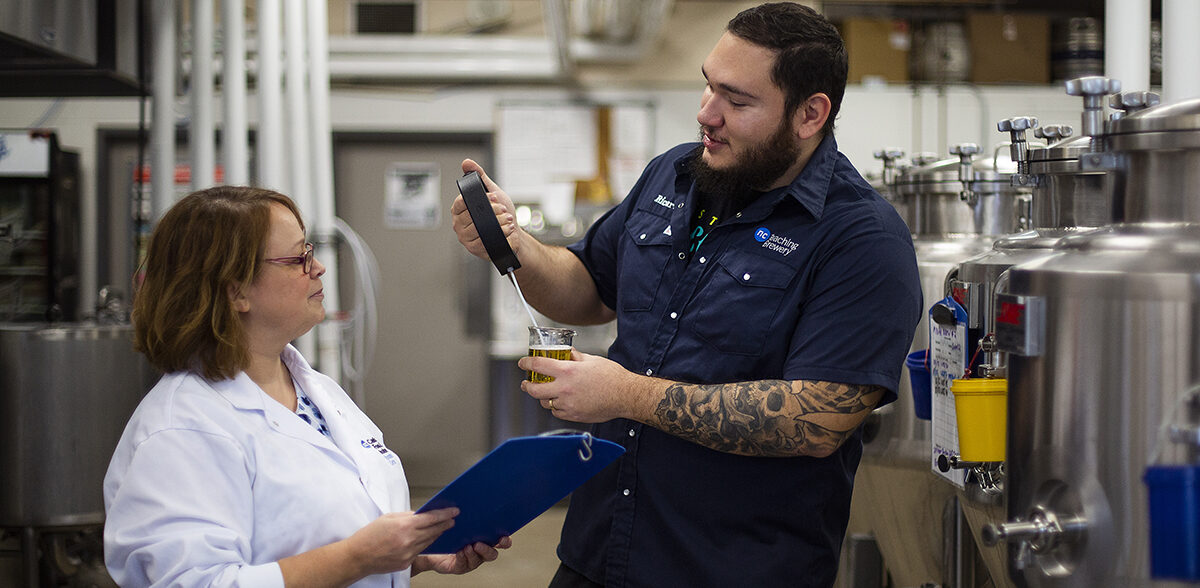
While the founding team brought strong creative and operational experience, developing a commercially viable beverage required technical expertise, formulation support, and product validation. That search for support led them to Niagara College’s Food and Beverage Innovation Centre (FBIC).

Building a beverage brand during COVID

The partnership with FBIC began during a uniquely challenging time, when even product tastings looked very different.

“I remember the first tasting we did with FBIC,” Tarlo said. “I had to meet them in the parking lot because of COVID-19 and social distancing. It was a scorching summer day, and I was provided samples in ramekins to taste in the parking lot and samples to bring home.”

Despite the unusual circumstances, the collaboration quickly became an important part of Darling’s early growth.

“We came into the world of beverage entrepreneurship incredibly optimistic but novice when it came to developing a product like this with such fresh ingredients,” Tarlo said. “But Niagara College was collaborative, patient, inventive, and supportive. They would take our direction and build upon it. They were always additive.”

“Darling came to FBIC with a clear brand vision and a strong sense of the consumer experience they wanted to create,” said Dr. Ana Cristina Vega Lugo, Scientific Manager at FBIC. “Our role was to help translate that vision into a product that could be developed, tested, and prepared for commercialization, even while we were navigating the limitations of working during COVID.”

Working alongside FBIC, Darling began refining the products that would eventually become the foundation of the brand, beverages rooted in real ingredients, transparency, and elevated drinking experiences.

For the team, those values were non-negotiable from the beginning.

Niagara College was collaborative, patient, inventive, and supportive. They would take our direction and build upon it. They were always additive.

Kim Tarlo, co-founder, Darling

“We always wanted real juice, real ingredients, and transparency,” Tarlo said. “We thought it was strange that other brands expect people to put things in their bodies without knowing what’s actually in it.”

The local focus also became a central part of the company’s identity.

“We’re local kids – I say as a group in our 40’s. We all grew up in Ontario,” she said. “Supporting local businesses has always mattered to us, especially coming out of COVID.”

That philosophy eventually shaped not only the ingredients and sourcing decisions behind the brand, but also the overall customer experience Darling wanted to create.

“Our brand ethos is ‘live life on the bright side,’” Tarlo said. “A mimosa is usually tied to celebration or brunch, and by putting it in a can, it brings celebration into everyday life.”

Turning ideas into shelf-stable products

At FBIC, the work focused on helping Darling translate those brand and sensory goals into a product that could succeed commercially.

The development process began with detailed product briefs from Darling outlining everything from nutritional targets and ingredient preferences to flavour, mouthfeel, carbonation, and overall drinking experience.

“It always starts with a brief,” Tarlo said. “We would outline everything from flavour and finish to how we wanted the drink to feel when you drank it.”

From there, FBIC worked through different formulation approaches and ingredient combinations to help achieve the desired sensory profile.

“There are so many ways a flavour can show up,” Tarlo explained. “Orange can taste like fresh citrus the peel or the juice, or candied orange, say. One sample might feel more bubbly, another more juicy. You get really specific about the sensory direction you want.”

“With beverage development, small changes can have a significant impact on the final product,” said Dr. Ana Cristina Vega Lugo. “Flavour, sweetness, acidity, carbonation, mouthfeel, and finish all need to work together. Through the formulation and sensory process, we were able to help Darling refine those details while staying true to the product experience they had in mind.”

“One of the biggest things they gave us was confidence,” Tarlo said. “When you’re putting a liquid in a can and selling it to people, you want to know not only that they’ll enjoy it, but that it’s safe and professionally formulated.”

Kim Tarlo, co-founder, Darling Beverages

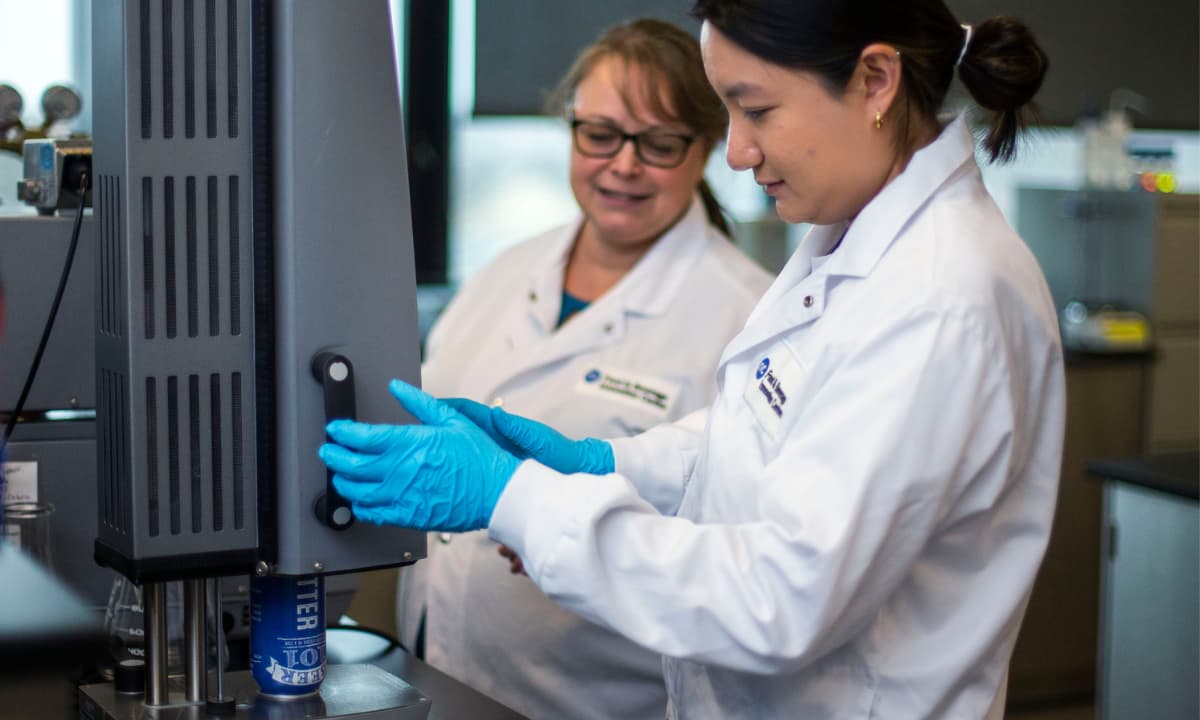
The project also included carbonation recommendations, shelf-stability considerations, and technical guidance that helped Darling move confidently toward commercialization.

“One of the biggest things they gave us was confidence,” Tarlo said. “When you’re putting a liquid in a can and selling it to people, you want to know not only that they’ll enjoy it, but that it’s safe and professionally formulated.”

The partnership also gave the company access to technical expertise and innovation support that would have been difficult to access independently as an early-stage business.

“I think when you first start out as an entrepreneur, there’s the challenge of figuring out how you can access this kind of support,” Tarlo said. “It’s one thing to develop a product, but it’s another thing to make sure it’s shelf stable and commercially viable.”

“For any ready-to-drink beverage, it is not enough for the product to taste good,” said Dr. Ana Cristina Vega Lugo. “It also needs to be safe, stable, and consistent. Supporting companies through that technical validation process is a key part of what FBIC does, and it helps give entrepreneurs greater confidence as they move toward market.”

Expanding the brand

As Darling continued to grow, the company returned to FBIC to support development work related to a sangria product aimed at expanding the brand beyond brunch occasions.

“It was definitely portfolio extension and occasion extension,” Tarlo said. “For example, when we expanded from Mimosa to Sangria, the product still felt elevated and celebratory, and it fit naturally within our brand.”

At the same time, the team wanted to ensure expansion did not complicate operations.

“We wanted to grow the portfolio without creating unnecessary complexity,” she said.

“The sangria project was a natural extension of Darling’s brand,” said Kristine Canniff, Associate Director at FBIC. “They were not simply looking to add another product; they were thinking carefully about how the new beverage would fit within their identity, their operations, and the occasions where consumers would enjoy it.”

The project also helped reinforce how consumer perceptions around ready-to-drink beverages have evolved in recent years.

“If you went back 10 years, people probably wouldn’t have viewed canned cocktails as favourably or as premium as they do now,” Tarlo said. “Now consumers are looking for quality ingredients, thoughtful formulation, and convenience together – the same elevated experience they get in a handmade cocktail.”

Today, Darling continues to navigate Ontario’s changing ready-to-drink beverage landscape, with a current focus on expanding grocery and convenience distribution opportunities across the province. For Tarlo, the experience reinforced the importance of collaboration for small businesses trying to scale.

“To be a small business owner, you wear a lot of hats,” she said. “When you can partner with an organization like FBIC, it feels really good to hand one of those hats to someone else with total trust.”

Partnerships like this show the value of applied research for small and growing food and beverage companies. Businesses may have strong ideas and strong brands, but they do not always have access to the technical infrastructure, testing capabilities, or formulation support needed to move a product forward. FBIC helps bridge that gap.

Kristine Canniff, Associate Director, FBIC

The company also appreciated seeing strong female leadership reflected throughout the partnership.

“We’re a very women-led business,” Tarlo said. “So, it was really cool working with an organization where we experienced that same thing.”

“Partnerships like this show the value of applied research for small and growing food and beverage companies,” said Kristine Canniff. “Businesses may have strong ideas and strong brands, but they do not always have access to the technical infrastructure, testing capabilities, or formulation support needed to move a product forward. FBIC helps bridge that gap.”

What started as a simple question at a cottage has since evolved into a growing Ontario beverage brand in its 6th year of focusing on optimism, local ingredients, and creating small moments of celebration, one can at a time.

For businesses developing new food and beverage products, the experience highlights the value of working with an applied research partner that can help transform an idea into a market-ready product with greater confidence, technical support, and strategic guidance.

Businesses looking to develop or refine food and beverage products can connect with David DiPietro to learn how NC’s Business and Commercialization Innovation Centre provides applied research support.

Do you have an innovation in mind? A project to discuss?

To learn more about our services, contact:

David DiPietro
Business Development Manager
[email protected]

Visit our website to learn more!

Date

Jun 24, 2026

Type

E-Newsletter

Project Successes

Sector

Food and Beverage

Do you have an innovation in mind? A project to discuss?

To learn more about our services, contact:

David DiPietro
Business Development Manager
[email protected]

Visit our website to learn more!