

What began as a personal search for a healthier beverage option is evolving into a Canadian wellness brand focused on functional ingredients, clean labels, and science-backed innovation.
I wanted this product for me. I’m pre-diabetic, I lost my dad to diabetes, and my mom has been diabetic for over 20 years. I still wanted flavour, but most of the options out there either have too much sugar or don’t taste good.
Sanjaya Yaddehige, co-founder, CN Foods
How Niagara College Helped CN Foods Develop a Functional Beverage
Established in 2024, CN Foods was co-founded by husband-and-wife team Sanjaya and Ravina Yaddehige, who set out to build something meaningful around their shared passion for healthy, high-quality food products. The company initially focused on importing premium organic products and developing curated corporate gift offerings, but its newest innovation came from a much more personal place.
“I wanted this product for me,” said Sanjaya Yaddehige, co-founder of CN Foods. “I’m pre-diabetic, I lost my dad to diabetes, and my mom has been diabetic for over 20 years. I still wanted flavour, but most of the options out there either have too much sugar or don’t taste good.”
With a background in banking and organic food manufacturing, Sanjaya had seen the food industry from several angles. He understood the challenges small businesses face when bringing products to market, but he had also seen the growing demand for cleaner, healthier food options. At home, that interest was even more personal. With two young sons, he and his wife were already focused on choosing food products they felt good about.
That combination of industry experience and personal motivation shaped the direction of CN Foods. Sanjaya began looking for a product that could serve consumers like him: people who are sugar-conscious and interested in wellness, but still want something enjoyable to drink.
We knew about Ceylon cinnamon growing up as a spice and also as a herbal, medicinal drink. But once I started looking into the research and understanding the potential benefits, that’s really when the idea started becoming something bigger. For example, recent research done at University of Toronto had concluded that brewed Ceylon cinnamon water is as effective as Metformin for Type 2 Diabetes.
Sanjaya Yaddehige
Building a beverage with purpose
The search brought him to two key ingredients: Canadian wild blueberries and organic Ceylon cinnamon.
Low-bush wild blueberries offered a Canadian ingredient with naturally high polyphenol content, while Ceylon cinnamon connected back to Yaddehige family and cultural background. Holding dual citizenship in Canada and Sri Lanka, Yaddehiges knew about medicinal value of Ceylon cinnamon, often referred to as true cinnamon, which is native to Sri Lanka.
“We knew about Ceylon cinnamon growing up as a spice and also as a herbal, medicinal drink” he said. “But once I started looking into the research and understanding the potential benefits, that’s really when the idea started becoming something bigger. For example, recent research done at University of Toronto had concluded that brewed Ceylon cinnamon water is as effective as Metformin for Type 2 Diabetes.”
The concept was promising, but it also presented a challenge. Yaddehiges were not looking to create another standard beverage. They wanted a product that was flavourful, functional, shelf-stable, and commercially viable. Achieving that balance required more than an idea; it required the right technical partner.
Finding the right partner
That journey led CN Foods to Niagara College’s Food and Beverage Innovation Centre (FBIC).
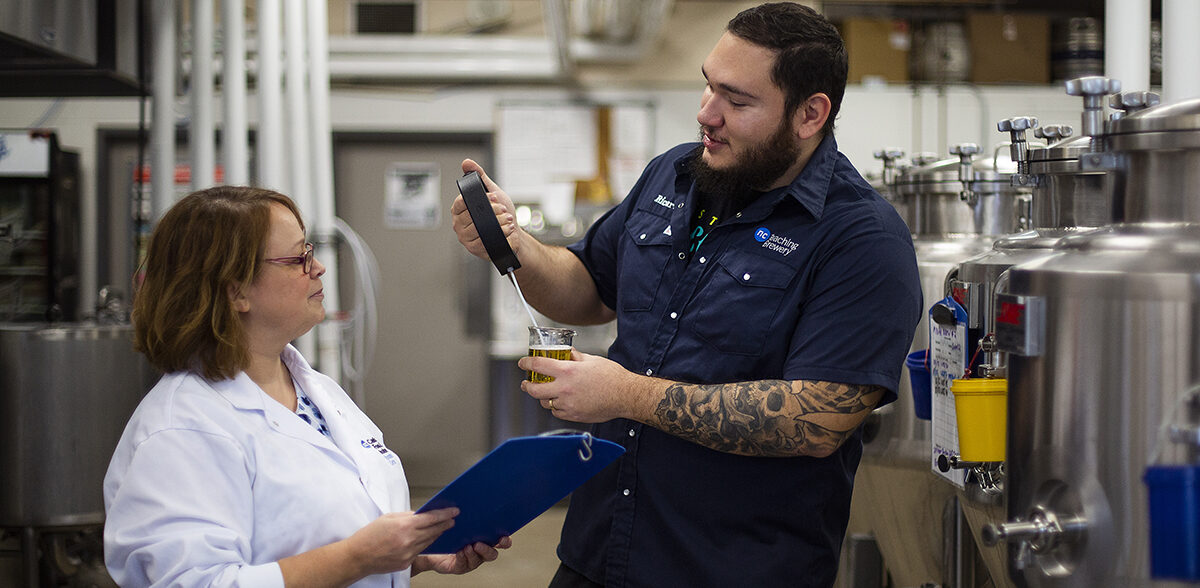
After an initial conversation with the Saskatoon Food Centre, Sanjaya was connected with Niagara College’s Food and Beverage Innovation Centre (FBIC) for its beverage development expertise. The referral quickly became a turning point, giving CN Foods access to the technical support and pilot-scale facilities needed to move the concept forward.
“As a startup, you don’t have the resources to do everything yourself,” he said. “I wasn’t just looking for someone to formulate a product. I was looking for a partner that could help bridge the gap between research and commercialization.”
From the beginning, the work with FBIC was focused not only on creating a beverage that tasted good but also on developing a product that could be produced, tested, refined, and eventually brought to market. That meant considering flavour, stability, carbonation, food safety, shelf life, and scalability simultaneously.
Working with the FBIC team, CN Foods began moving from concept to prototype. The process included experimenting with different berry varieties, adjusting the blueberry-cinnamon balance, testing carbonation levels, and refining the product to meet both consumer expectations and commercial requirements.
“Working with CN Foods was an exciting opportunity to learn the value of Ceylon cinnamon and develop outstanding unique flavour profiles that would provide functionality while ensuring safety and quality” said Dr. Ana Cristina Vega Lugo, Scientific Manager at FBIC. “Our role was to help translate that idea into a tangible, scalable product that could move toward commercialization.”
One of the earliest tasting sessions became a family affair. Sanjaya brought his wife and two sons to the centre to try different versions of the product and help narrow the direction.
“My kids actually came with us for one of the tasting sessions,” he said. “We tried different blends together, and as a family, we selected the blueberry combination. Blueberry and cinnamon just worked.”
That early flavour decision helped define the product, but the work did not stop there. Once the core blend was selected, the project entered the technical refinement phase to make the beverage stable, consistent, and ready for real-world testing.
Turning research into reality
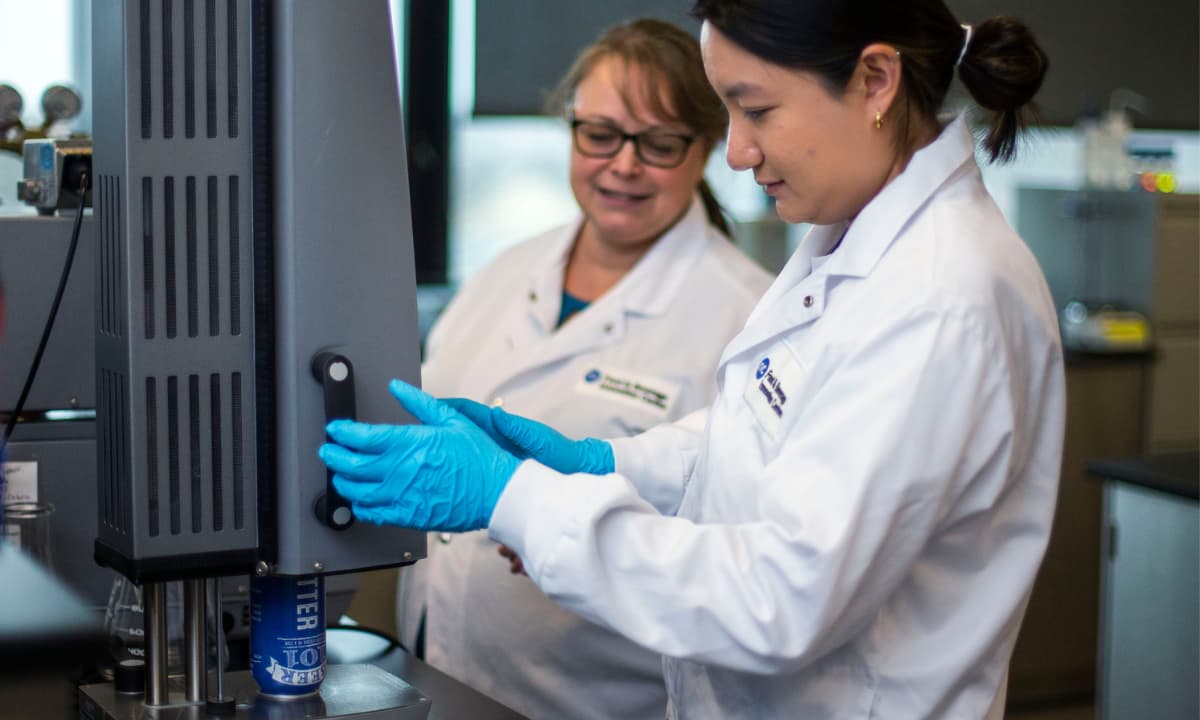
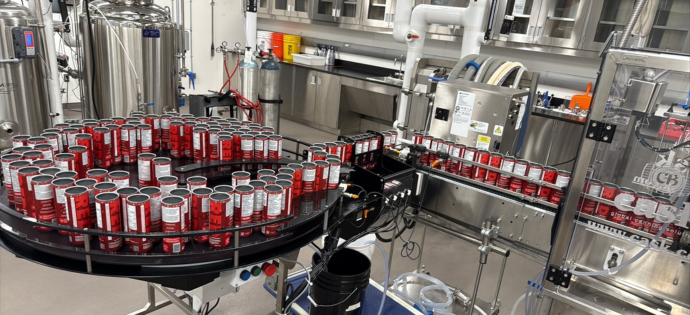
Throughout the project, FBIC provided support in formulation, carbonation testing, pasteurization, shelf-life analysis, and pilot-scale production. For Sanjaya, that support was essential because it allowed the company to test and improve the product without immediately committing to large production volumes.
“The pilot plant was critical,” he said. “The co-packers I spoke with had minimum volume requirements that were too large for an early-stage product. FBIC allowed us to produce smaller quantities, test the market, and continue refining the product without taking on massive risk.”
For many early-stage food and beverage companies, this stage can be one of the most difficult. A product may work in concept, but moving it into production requires decisions that can affect cost, consistency, food safety, taste, and long-term shelf life. Through FBIC, CN Foods was able to navigate those decisions with technical guidance and access to equipment that would otherwise be difficult for a startup to obtain.
FBIC allowed us to produce smaller quantities, test the market, and continue refining the product without taking on massive risk.
Sanjaya Yaddehige
Turning research into reality
“Pilot-scale production is often a critical step for early-stage food and beverage companies,” said Lyndon Ashton, Associate Director, Economic Development and Planning for FBIC. “It gives businesses the ability to validate their product, understand production requirements, and reduce risk before moving into larger-scale manufacturing.”
The final beverage is shelf-stable and meets the desired organoleptic attributes while presenting a clean label. Sanjaya wanted the drink to meet the needs of people looking for something better, yet still choose it because they enjoyed the taste.
To better understand that response, the company also conducted informal consumer testing with individuals monitoring their glucose levels. While formal clinical validation remains a future goal, the early feedback helped reinforce confidence in the product’s direction.
“Those early results were really encouraging,” he said. “It helped confirm we were building something sugar-conscious consumers were genuinely interested in.”
As the beverage moves toward broader commercialization, early market response is already generating momentum.
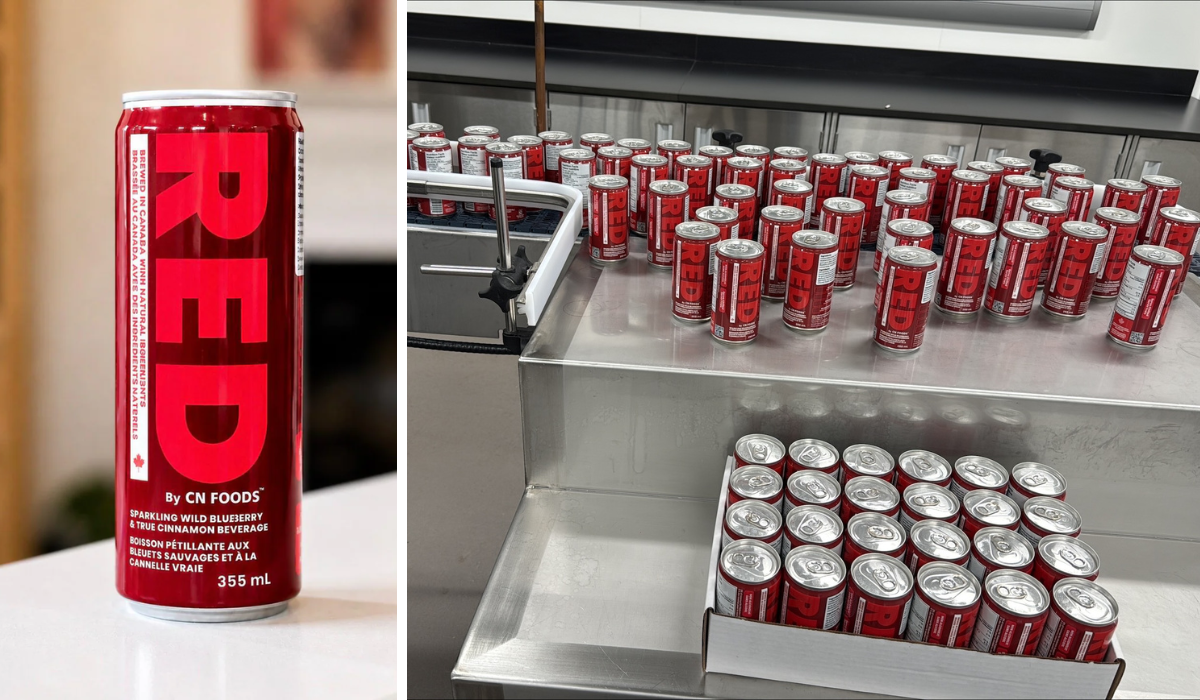
A product is gaining attention.
The vibrant natural color of the blueberry-cinnamon blend has led many consumers to compare it to red wine, creating an unexpected opportunity for the product as a non-alcoholic alternative. For Yaddehiges, that discovery opened another potential market beyond sugar-conscious consumers.
“At an event recently, people thought it was red wine when we poured it into glasses,” he said. “That’s when we realized there was another opportunity there as a non-alcoholic alternative.”
The product has already been introduced in hospitality settings and served at events, including weddings, while retail conversations continue to move forward. That early interest has helped CN Foods see how the beverage could fit into several consumer moments, from everyday wellness routines to social occasions where people are looking for something flavourful and alcohol-free.
At the same time, the company is already looking beyond its first product.
Looking ahead
Yaddehiges see CN Foods growing around functional products that support consumers in practical ways. Future beverage concepts may focus on recovery, wellness, performance, or sleep, while the company is also exploring powdered supplement products featuring functional ingredients.
“We want to create products that actually help people,” he said. “Not just another drink.”
That outlook is also shaping the company’s continued relationship with Niagara College. The first project gave CN Foods a clearer understanding of what it takes to move from concept to commercialization, and Sanjaya is already considering future opportunities to work with FBIC on additional product development.
For CN Foods, the partnership has become more than a single project. It has provided technical expertise, commercialization support, and a pathway for future innovation.
“It’s like having your own in-house R&D partner,” Sanjaya said. “They stay with you through the commercialization journey.”
“CN Foods is a strong example of how applied research can help small- and medium-sized businesses move from concept to market,” said Kristine Canniff, Associate Director of FBIC. “By combining technical expertise, product development support, and pilot-scale facilities, FBIC helps companies advance innovation in a practical and commercially focused way.”
For businesses developing new food and beverage products, the experience highlights the value of working with an applied research partner that can support both product innovation and commercialization readiness. By combining industry expertise, pilot-scale manufacturing capabilities, and hands-on collaboration, Niagara College’s FBIC helps businesses move innovative concepts from ideas to market with greater confidence.