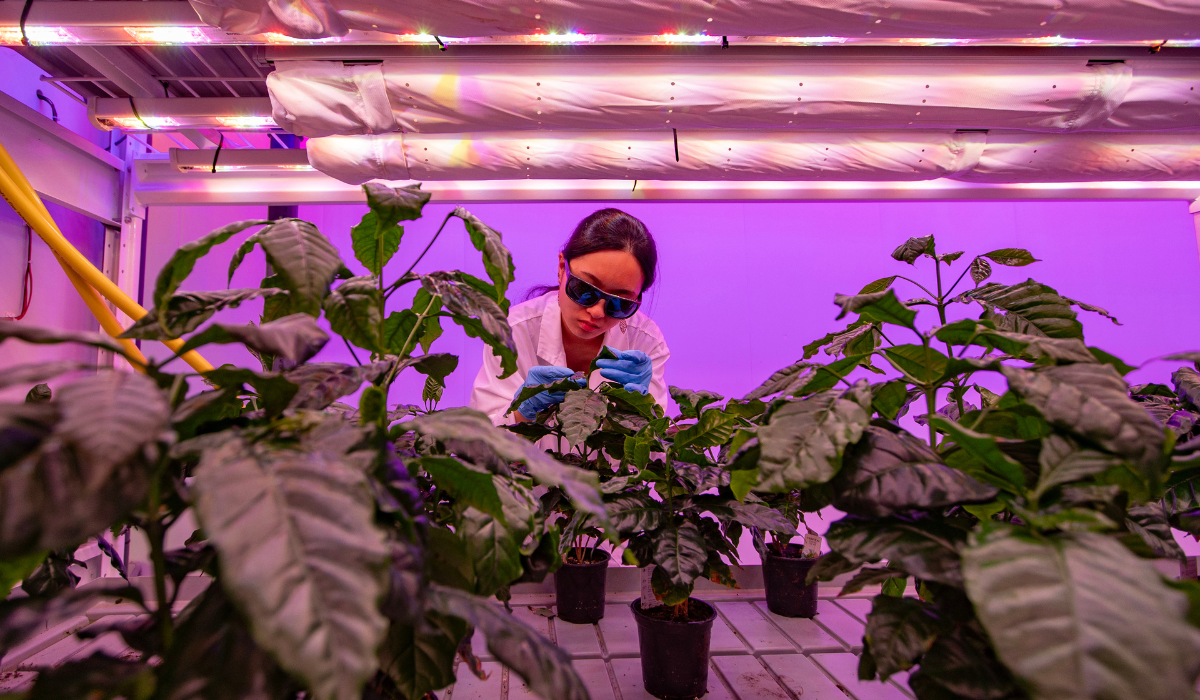
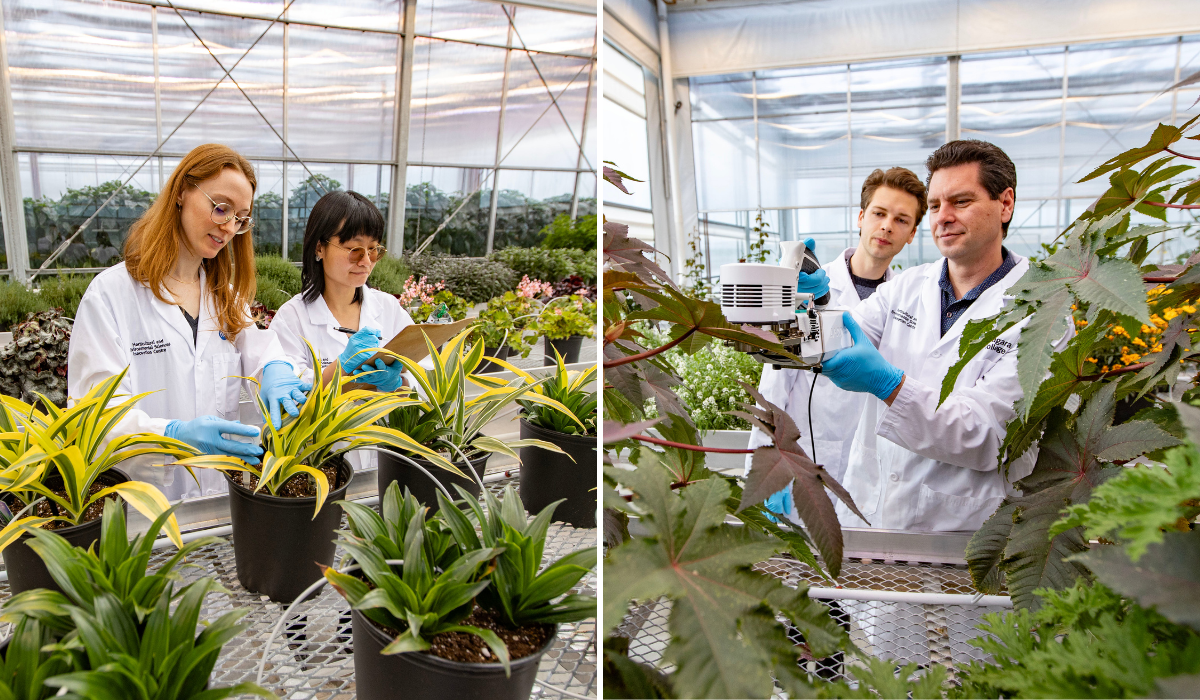
HESIC’s research greenhouse and laboratory spaces are designed to bridge the gap between early-stage ideas and commercial implementation. The centre allows companies to test products, technologies, growing systems, and environmental approaches in controlled, commercially relevant environments before scaling them into production.
“We’re kind of in that sweet spot,” Paling said. “We’re large enough to be commercially relevant, but still small enough to move quickly and support companies in that pre-commercialization phase.”
That flexibility allows HESIC to support a wide variety of applied research projects.
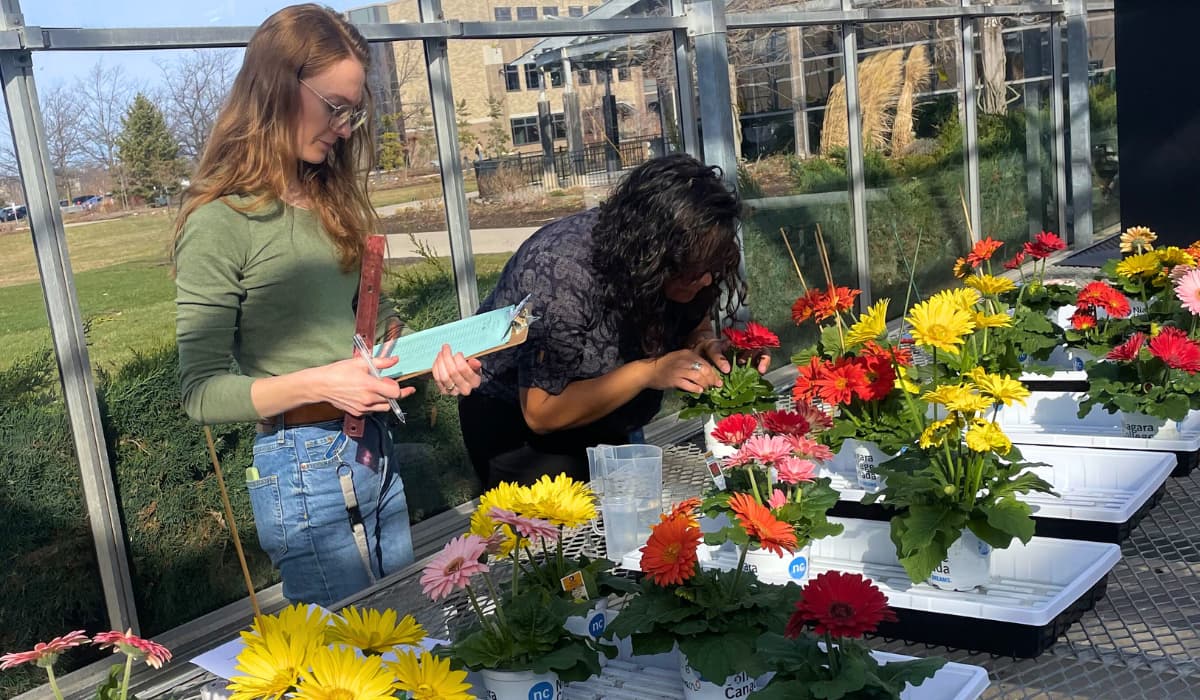
Current work includes disease-resistant crop trials, environmental testing, technology validation, alternative growing systems, precision agriculture tools, and projects involving waste-stream repurposing for agricultural use. Researchers are also supporting companies looking to validate products before bringing them to market.
“They need that preliminary data before they can commercialize,” Golem said. “That’s really where we fit in.”
One of HESIC’s advantages within NC’s Research and Innovation division is its ability to connect industry partners with expertise across multiple innovation centres. While HESIC specializes in horticulture and environmental sciences, projects can also intersect with support from the Walker Advanced Manufacturing Innovation Centre, the Food and Beverage Innovation Centre, the Business and Commercialization Innovation Centre, and the Healthy Aging and Wellness Innovation Centre.
That means partners can access expertise in areas such as manufacturing, automation, product development, food and beverage innovation, commercialization, market strategy, and health and wellness applications through NC’s broader applied research ecosystem.
“We’re not operating in a silo,” Paling said. “If a partner needs support beyond horticulture, we can help connect them with the right expertise across NC.”
Both Paling and Golem emphasized that HESIC’s approach is intentionally collaborative and partner focused. Some businesses rely heavily on the research team’s expertise, while others prefer to be closely involved in trial design, testing decisions, and project development throughout the process.
“We really value that collaboration with partners,” Paling said. “Every project looks a little different depending on what they need, and we want them to feel involved in the process.”
That hands-on relationship often includes facility tours, regular project updates, and opportunities for partners to see their concepts move from ideas on paper into active greenhouse and laboratory trials.
The new applied research greenhouse was intentionally designed to replicate multiple commercial growing environments while maintaining the flexibility needed for experimentation and validation.
“We can basically replicate most commercial growing systems now,” Golem said. “That’s what makes the facility so valuable for industry.”
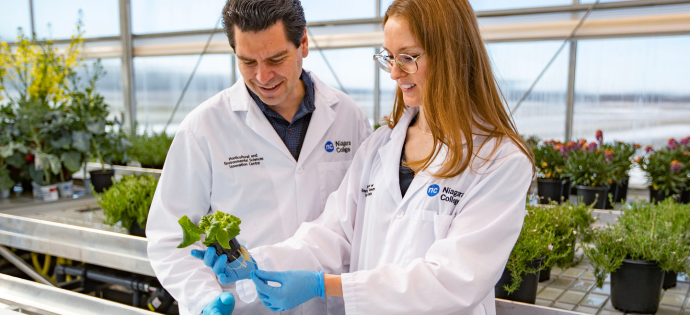
The facility includes vertical grow systems, contained research bays, analytical laboratories, environmental controls, drought stress testing capabilities, advanced imaging technologies, and greenhouse spaces that allow researchers to safely test products and processes that commercial growers may not want to trial directly in active production environments.
Because the greenhouse includes fully contained research bays with strict sanitation and biosecurity protocols, HESIC can safely conduct disease, pest, and pesticide trials in isolated environments.